Imagine a 60-page document that begins by solemnly announcing it is not a forecast, not a job guarantee, and not an official anything — and yet proceeds, with the quiet confidence of a man who insists he's "just asking questions," to map the entire skills destiny of a nation of 63 million people. This is the Capability Atlas: part policy paper, part existential group therapy session for a country that has, by its own admission, become extremely good at producing "qualified people and failing systems at the same time." It calls this a "national speciality." One almost wants to applaud the honesty. One almost wants a refund on the irony.
The Big Idea
The atlas's central thesis is disarmingly simple: South Africa should stop counting graduates and start counting whether the water still comes out of the tap. It introduces the concept of a "capability system" — work + professionals + research + citizens, all humming together like a Volkswagen assembly line, except the Volkswagen is a hospital, or a dam, or, somewhat ambitiously, "democracy." The document notes that a water system needs not just hydrologists but "process controllers, artisans, asset managers... and citizens able to participate in water governance." In other words: it takes a village, and also an engineer, and also somebody who reads the municipal newsletter.
Evidence Classes
To lend this scientific gravity, the atlas sorts every prediction into three "evidence classes," which read a bit like ahoroscope categories for policy wonks:
- Class A — "present and persistent." Translation: this is already on fire, please attend to it.
- Class B — "committed transition." Translation: someone signed a document about this once.
- Class C — "scenario-dependent option." Translation: we have absolutely no idea, but it sounded exciting in the workshop.
Meanwhile, "capable government" is Class A, described with the weary understatement that municipalities need "urgent" attention, as though this were breaking news to anyone who has queued at Home Affairs.
Three Horizons
The plan is divided into the Repair Horizon (2027–2030, i.e., "please stop the bleeding"), the Transition Horizon (2031–2034, i.e., "now for the ambitious bit"), and the Option Horizon (2035–2037, i.e., "we'll figure this out later, possibly with a committee"). The document helpfully clarifies these horizons "overlap" and are "a sequence for investment, not dates on which reality has agreed to behave." One suspects reality has, in fact, never agreed to anything in a South African planning document, and everyone involved is simply too polite to say so directly.
Twelve Capability Systems
The atlas then unfurls twelve — twelve — capability systems, ranging from Health and Education (fair enough, these matter) to "Language, Culture, Media and the Creative Economy" (also fair) to the slightly more ambitious "Research, Knowledge Sovereignty and Innovation," under which sits an entire section on astronomy, because Northern Cape apparently must moonlight as both a drought-management hub and a space program. Each system arrives with its own four-layer table — Work, Professional Expertise, Research, Civic Capability — a structure so relentlessly consistent that by system six, the reader begins reciting it in their sleep like a catechism: and lo, there shall be artisans, and lo, there shall be a research agenda, and lo, the citizens shall be literate about it.
Highlights include the revelation that South Africa must simultaneously "operate legacy systems" (keep Eskom's ancient power stations limping along), "expand and stabilise the grid" (build new things), and "manage the social and environmental consequences of transition" (deal with the coal towns after the coal leaves) — three enormous jobs listed with the same brisk efficiency as a grocery list. Milk, eggs, just energy transition.
The Provincial Beauty Pageant
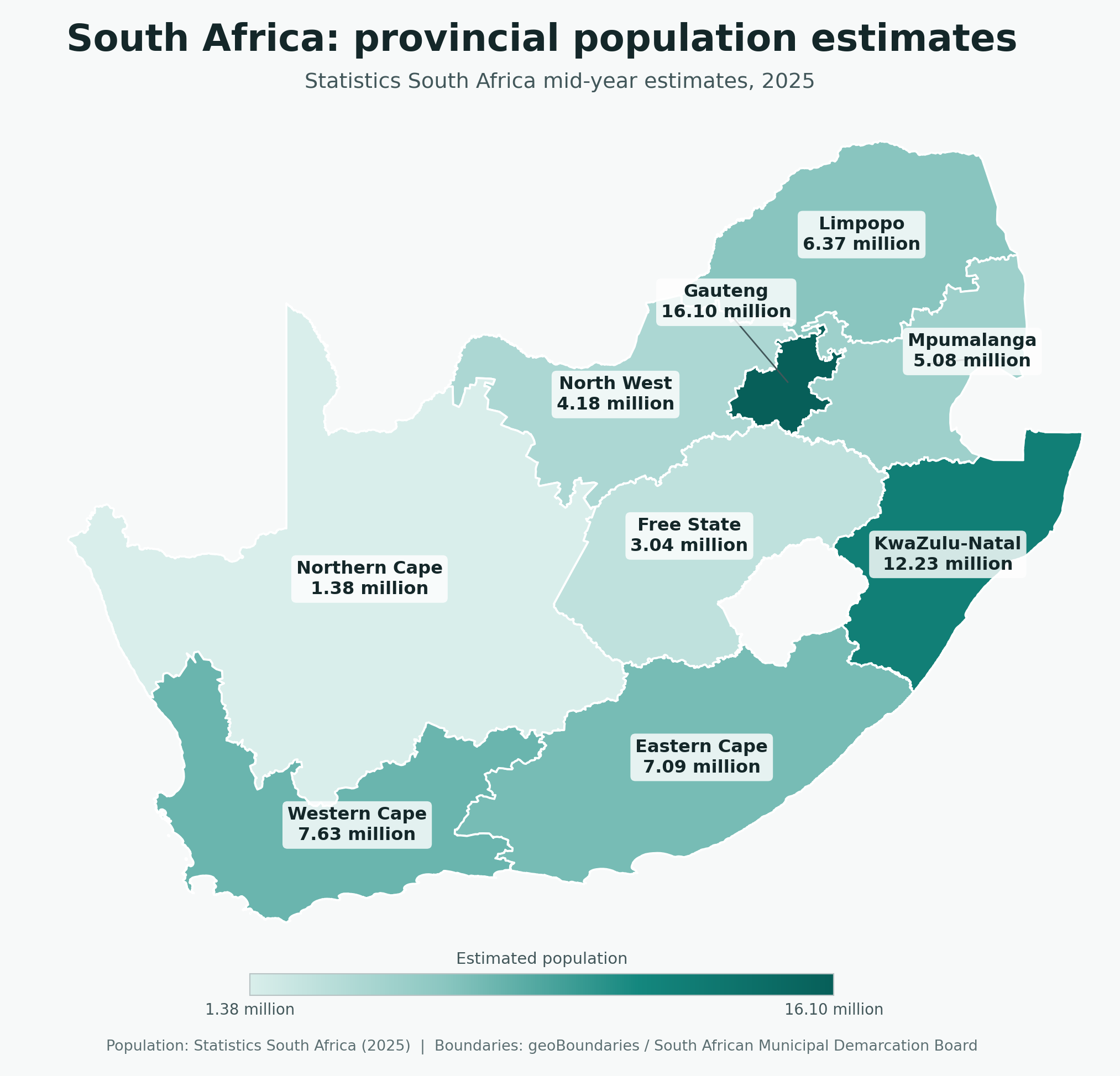
Then comes the provincial rundown, in which each of the nine provinces is assigned its destiny like a sorting hat with a spreadsheet. Mpumalanga: coal transition and "worker and community transition institutions" (translation: please be gentle when the mines close). Northern Cape: solar panels, minerals, and astronomy — apparently the loneliest province in the country has been asked to gaze both downward into the earth and upward into deep space, simultaneously, while also managing a drought. Gauteng gets AI, finance, and "social cohesion," as if the country's most congested province simply needs a slightly better vibe. The document insists this is "a portfolio view, not nine small economic plans," which is the diplomatic equivalent of saying "I'm not saying you're the sidekick province, I'm just saying you're the sidekick province."
Glorious Tables
No fewer than thirty-plus tables punctuate this document, each with the same four columns rearranged like a very serious game of Tetris. There is a table for "National Backbone Capabilities." A table for "Interprovincial Corridors." A table for "The Professional Backbone Between Sectors" — which is, delightfully, a table about the concept of connective tissue between other tables. At some point the atlas essentially becomes a table describing tables, a bureaucratic ouroboros eating its own header row.
The Self-Aware Disclaimer
To its credit, the document is refreshingly honest about its own limitations, almost to the point of self-sabotage. It warns that it "does not estimate the number of jobs in 2037." It warns that a policy plan "is evidence of direction, not proof that investment... will materialise." It warns that it "could be captured by provider interests, sector lobbying, or fashionable technologies" — a sentence that reads less like humility and more like a person confessing to a crime he/she's already decided to commit anyway, but wanted credit for mentioning first.
The Punchline
And here is the document's real magic trick: despite the acronyms (DHET, DALRRD, DMPR, PCC — enough alphabet soup to choke a Scrabble board), despite the earnest matrices, despite twelve capability systems and nine provincial destinies and three evidence classes and three time horizons, the entire thesis boils down to something almost embarrassingly obvious: train the plumbers, keep the teachers, fix the potholes, and maybe don't build a hydrogen economy on a hunch. It is, in essence, a document spent very carefully, very earnestly, re-discovering common sense — and then footnoting it forty-one times for good measure.
The closing line admits the map "will be wrong in places" and warns against discovering in 2037 that the country has "credentials in abundance and capability in rather shorter supply" — which, frankly, might be the most quietly devastating sentence in the entire report, precisely because it's already, demonstrably, the plot of the last thirty years.
Verdict: A genuinely thoughtful, well-evidenced planning document wearing the elaborate ceremonial robes of a national five-year plan, mostly to convince itself it's allowed to say the quiet part out loud: fix the basics first. Recommended reading for policy nerds, provincial planners, and anyone who enjoys watching a document apologize for its own genre while still fully committing to the bit.